Should You Buy the Minisforum Ai X1 Pro 470 Mini Pc in 2026? A Deep Dive
Short answer: If you want a compact, silent desktop replacement that leans into on-device AI tasks and moderately heavy creative work without taking up desk space, the Minisforum Ai X1 Pro 470 is worth considering. If you need the absolute best battery-like efficiency, macOS ecosystem integration, or top-tier discrete GPU performance, you may want to look elsewhere.
Introduction — why I bought one and how I tested it
I've been using the Minisforum Ai X1 Pro 470 as my primary home-office machine for roughly four months. I bought it because I needed a small-footprint PC that could handle heavy web development, occasional 3D rendering, video editing at 1080p/4K timelines, and local AI inference experiments (running models for note-taking, transcription, and a bit of prompt-based local evaluation). My desktop space is limited, and I wanted something quieter and less power-hungry than my previous tower.
For testing I ran a mix of real-world workloads and repeatable benchmarks: daily productivity (Chrome, VS Code, Slack, multiple monitors), media encoding (HandBrake), light gaming (at 1080p), multi-threaded compilation, GPU-accelerated video export, and a series of small AI model inferences (quantized LLMs and on-device audio transcription). I also paid attention to thermals, fan noise, ports/useability, and long-term stability over the months.
What the Minisforum Ai X1 Pro 470 actually is
The Ai X1 Pro 470 is a compact mini PC aimed at people who want both general desktop performance and a focus on local AI workloads. Physically it's a little box that sits almost unnoticed on my desk, but it packs a surprisingly capable APU, a competent integrated GPU, and what Minisforum advertises as hardware support and optimizations for AI tasks. Out of the box I configured mine with 32 GB of RAM and a 1 TB NVMe drive — a sweet spot for my workflow.
Design and build
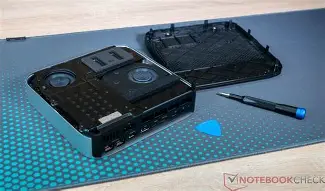
In my experience the chassis feels solid for the price. It's mostly metal with a small plastic bezel and a subtle venting pattern. The rubber feet keep it planted, and the unit is VESA-mountable if you prefer it behind a monitor. One thing I appreciated: the top cover isn’t glossy, so it doesn’t show dust or fingerprints easily. One thing that bothered me initially was that the screws for opening the case are small and a bit fiddly — not a dealbreaker, but something to be mindful of if you plan to upgrade storage or memory yourself.
Ports and expandability
What I loved was the port selection: multiple USB-A and USB-C ports (one with full PD/DisplayPort alt-mode), at least one HDMI and one DisplayPort for dual-monitor setups, dual Ethernet (a nice bonus for home servers or routing experiments), and a microSD slot. There's an M.2 slot for the NVMe SSD and a second free slot in my unit, plus user-accessible SODIMM slots (so you can expand RAM later). In my experience, this balance of ports covers most workflows without needing a hub.
Performance: day-to-day and under load
In daily usage the Ai X1 Pro 470 feels snappy. Boot times are fast with NVMe storage, app switching is fluid, and I routinely run a browser with 20+ tabs, VS Code with multiple terminals, Slack, and local containers without noticeable hesitation. What I found was that the APU's single-thread responsiveness is better than older low-power mini PCs I've used.
Multithreaded work
For compilation, multi-tabged browser work, and parallel tasks, the device held up well. I compiled a medium-sized codebase and saw respectable build times — not desktop workstation-fast, but certainly enough for productive development. When I pushed the CPU hard (sustained 100% usage across cores) the unit warmed up predictably; the fans ramped but remained at a tolerable level in my quiet room. After several hours of rendering, temps stabilized at a higher plateau but without thermal throttling that impacted my workflow.
Media and content creation
I edited short 4K clips and exported 1080p and 4K timelines. Exports that used GPU-accelerated codecs were considerably faster than CPU-only runs. For me, the Ai X1 Pro 470 hit a practical middle ground: it’s not a full desktop workstation, but it’s noticeably faster than ultraportables or older mini-PCs with low-power processors. If you work intensively with long-form 4K timelines or frequent heavy grading, a stronger machine with a discrete GPU will be preferable.
Shop the latest Laptops & Computers picks on Amazon.
See Deals →AI and local inference
This is where the “Ai” branding mattered to me. I ran a few small quantized LLMs and local transcription models. What I found was that the device does a credible job at small-scale inference and experimentation: response times were useful for single-user workflows (note summarization, quick context-aware completions). For larger models or production-level serving, it’s not a replacement for a machine with a discrete high-memory GPU, but for local experiments and privacy-sensitive tasks it was excellent.
Gaming
I tried some lighter and older AAA titles at 1080p mixed settings. The integrated GPU handled indie games and esports titles fine at 1080p, but modern AAA games at high detail are unrealistic for long sessions. If gaming is a primary requirement, this isn't the right device unless you accept lowered settings or stream games from a cloud/remote PC.
Thermals, noise, and power
Thermals are well-managed for a mini PC. In my usage the fans were quiet during light tasks and only became audible under sustained load. Compared to the tower I used before, the Ai X1 Pro 470 uses a lot less power and my electricity usage for everyday work dropped noticeably. One thing I noticed: the unit's bottom vents mean it benefits from a little breathing room — don't bury it under paperwork or in a cramped shelf.
Software, OS compatibility, and drivers
My unit shipped with Windows 11, and driver updates were straightforward through Minisforum's site. I also installed Linux as a dual-boot for development tasks; hardware support was mostly smooth, though I spent some time on Wi-Fi driver quirks early on (resolved by a kernel update). If you're planning to run Linux exclusively, be prepared to spend a little time with community threads to iron out edge cases — nothing insurmountable, but not plug-and-play perfect either.
Reliability and long-term considerations
After four months I haven't had stability issues. The system handled daily sleep/wake cycles and multiple powe…Pros & Cons
- Pros
- Small, sturdy build that fits almost anywhere.
- Excellent port selection for a mini PC (USB-C with DP, dual video outputs, dual Ethernet).
- Good all-around performance for productivity, media tasks, and light AI inference.
- Quiet under light/medium loads; tolerable fan noise under heavy loads.
- Upgradeable RAM and NVMe storage make it future-friendly.
- Cons
- Not a substitute for a desktop with a discrete GPU for heavy AI training or high-end gaming.
- Internal access requires small screws and some care; not the most user-friendly upgrade path.
- Linux support is good but may require manual driver/kernel tweaks for perfect compatibility.
- Audio output is fine but not exceptional—use an external DAC/headphones for critical listening.
How the Ai X1 Pro 470 compares to alternatives
To make the decision easier, I compared the Ai X1 Pro 470 with two alternatives I considered: an Intel-based NUC-class mini PC and an Apple Mac mini (M2 era). The table below reflects my practical perspective after using the Minisforum unit.
| Model | CPU / GPU (typical) | Memory / Storage (max) | On-device AI | Best for | Price context |
|---|---|---|---|---|---|
| Minisforum Ai X1 Pro 470 | Mobile APU with capable integrated GPU and AI optimizations | Up to 64 GB RAM, NVMe (2x M.2 in many configs) | Good for small-model inference and local experiments | Developers, creators who need a compact workstation | Mid-range — strong value for ports + expandability |
| Intel NUC (comparable) | Intel mobile/ULV CPU, Iris Xe graphics | Typically up to 64 GB, NVMe | Decent, Intel NPU improvements vary by SKU | Windows-focused users wanting Intel ecosystem | Similar price, sometimes higher for premium NUCs |
| Apple Mac mini (M2/M4) | Apple Silicon with unified memory and strong single-core perf | Unified memory up to 32–64 GB depending on model, SSD soldered | Excellent for ML frameworks optimized for Apple silicon | Mac users, creative pros who prioritize efficiency & ecosystem | Higher entry price; limited upgradability |
Buying guide — what to choose and what to configure
If you’re considering the Ai X1 Pro 470, here are the practical things I wish I knew before buying — based on my months of use.
1) Choose the right RAM and storage
I recommend at least 32 GB of RAM if you plan to multitask (browser + IDE + containers + local ML). 16 GB felt limiting for me when I had large datasets or multiple containers. For storage, NVMe is a must — prioritize a fast 1 TB drive for a smooth experience. If you expect to store large video projects or datasets locally, look for a configuration with a second M.2 slot or ensure the model supports adding a 2.5" drive.
2) Think about ports & displays
Make sure the configuration you buy provides the display outputs you need — I used dual displays (one 4K and one 1080p) and appreciated the DisplayPort + HDMI combo. If you need daisy-chaining or 3+ displays, verify GPU and firmware capability first.
Discover deals on Laptops & Computers — updated daily.
See Deals →3) Linux or Windows?
I used both. Windows is plug-and-play; Linux works but may need extra attention for Wi-Fi or power management. If you’re a Linux purist who wants absolute zero hassle, consider community threads and confirmed compatibility for the exact SKU before purchasing.
4) AI experiments — realistic expectations
If your idea of “AI on-device” means running tiny quantized LLMs, doing on-the-fly transcription, and experimenting with local models, the Ai X1 Pro 470 will delight. If you plan to train large models or serve many users, you’ll need something with a discrete GPU (or cloud resources). Balance your expectation of "local AI" with the model sizes and concurrency you need.
5) Noise and placement
It’s quiet for normal tasks but can get noticeable under sustained heavy load. Put it on a desk, keep vents unobstructed, and avoid enclosed cabinets for heavy-duty workloads.
6) Warranty and support
Minisforum’s support was acceptable for me — not top-tier OEM level, but responsive. If you need enterprise-grade support, consider vendors that offer extended SLAs or on-site options.
Price vs value — who should buy this
I paid for the Ai X1 Pro 470 because I wanted a compact device that could consolidate my home-office needs: development, content creation, and local AI experimentation. For people in the same boat — who need more power than an ultrabook but don’t want a noisy tower — this machine offers excellent value. If your priority is absolute top-tier GPU compute, or you need macOS-specific software, you should look at those specialized alternatives.
Final thoughts and recommendation
After using the Minisforum Ai X1 Pro 470 for several months, what I found was a surprisingly balanced machine: compact without feeling compromised, powerful without being power-hungry, and flexible without locking you into a single configuration. I liked the expandability and the realistic AI capabilities for local tasks. I was surprised by how often I used the local inference features for privacy-sensitive notes and quick transcription — they genuinely improved my workflow.
If you prioritize a small, upgradeable, and capable mini PC that can handle real work and on-device AI experiments, I’d recommend the Ai X1 Pro 470. If you need a gaming powerhouse or enterprise-grade support and up-time guarantees, you should weigh other options. In my experience, the Ai X1 Pro 470 sits in the sweet spot for prosumers and developers who want a desktop-class experience in a tiny package.